Bedding Guide
Coyuchi Organic Cotton Blankets: How to Compare Weave, Weight, and Care
A blanket can look simple folded at the foot of a bed, but its weave, finish, and weight shape how it feels once it is in regular rotation. Here is what to check when comparing Coyuchi organic cotton blankets—and how to match the details to your home, climate, and laundry habits.
“Organic cotton” is a useful starting point, not the whole story. Two blankets can share the same broad fiber description and still feel very different: one may be airy and softly textured, another substantial and close-woven. Construction affects drape, warmth, breathability, and how a blanket behaves after repeated washing. A closer look at the label and product details can help you choose a layer that feels right in daily life—not just in a carefully styled bedroom.
When reading Coyuchi blanket descriptions, focus on the practical clues: weave, dimensions, weight if provided, finishing details, certifications, and care instructions. Then consider how you plan to use the blanket. A lightweight layer for warmer nights has a different job from a heavier throw intended for a cool living room or for layering over a duvet. The best choice is the one whose construction and maintenance suit your routine.
Start with the weave, not just the fiber
Fiber tells you what the yarn is made from; weave describes how those yarns are arranged. That structure is often the difference you notice first when you touch a blanket. It can give the fabric a crisp or relaxed hand, an open or dense surface, and a flatter or more dimensional appearance.
A honeycomb or waffle-style weave has raised and recessed areas that create a distinctly textured surface. The structure may feel substantial while allowing air to move through the fabric, although the actual result depends on the yarn, density, and finishing. A plain, tightly woven blanket can have a smoother, more even face. A knit construction tends to flex and drape differently from a woven one, while a jacquard pattern builds design into the fabric rather than simply printing it on.
Herringbone is another useful point of comparison. Its characteristic zigzag pattern comes from the way the yarns are woven. The pattern adds visual texture, but it does not automatically tell you whether a blanket is heavy, warm, or suitable for a particular season. Check the fiber content and product specifications alongside the name of the weave.
A cotton comparison can make the terminology easier to picture. The Downtown Company Herringbone Blankets and Throws, for example, are described as 100% long-staple cotton with a zigzag weave, and the product information identifies them as washable. They are not presented as organic cotton, so they should not be treated as a substitute for an organic option. They simply illustrate how fiber, pattern, finish, and care are separate details to evaluate.
What blanket weight can—and cannot—tell you
Weight influences the way a blanket settles over the body and bed. A lighter blanket may feel easy to fold, carry, or use as a warm-weather layer. A heavier one can offer a more substantial drape and a grounded feel. But weight alone is not a complete measure of warmth: fiber, weave density, room temperature, bedding layers, and personal preference all play a part.
Product descriptions do not always publish a blanket’s weight in a consistent way. Some give a total weight, others list grams per square meter, and some use descriptive language such as “lightweight” or “weighty.” Those figures are not interchangeable. Total weight depends partly on the blanket’s dimensions; a larger blanket can weigh more even if its fabric is not denser. A weight per area, when available, can make comparisons between different sizes more meaningful.
If a specific weight is not listed, look for other clues without treating them as exact measurements. “Lightweight,” “breathable,” and “textured” suggest qualities to investigate, but they do not replace a published specification or an in-person feel. If you are comparing two choices remotely, note what information is missing and consider whether the store can clarify it. A little uncertainty is preferable to assuming that a particular weave guarantees a particular level of warmth.
Think about the blanket’s role, too. For a top layer in a warm room, airflow and a relaxed hand may matter more than substantial insulation. For a bed that feels chilly, you may prefer a fuller layer—or a blanket designed to work with a duvet. In a shared household, a midweight blanket that can be layered may be more flexible than one that serves only in a narrow temperature range.
Texture, finish, and drape are part of comfort
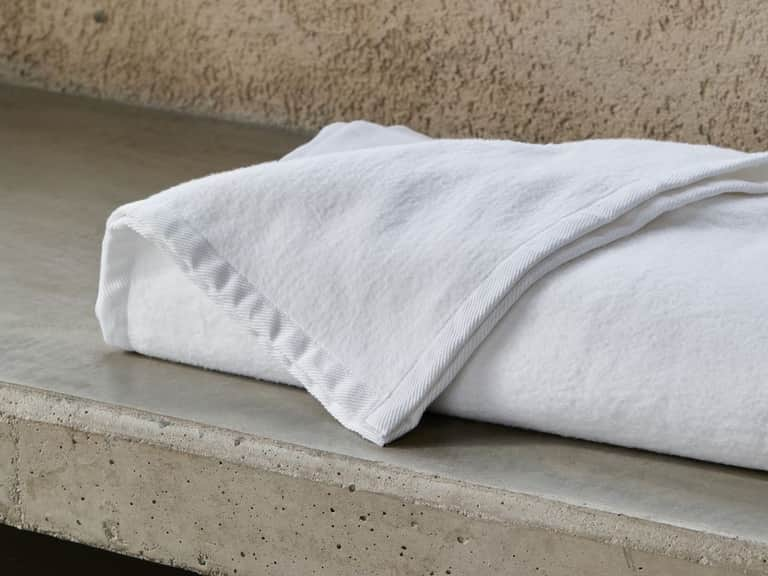
A blanket’s first impression is about more than softness. Run your hand across the surface, if possible, and notice whether it feels smooth, nubby, crisp, or plush. Raised textures can make a simple bedding arrangement feel more dimensional. A flatter weave may tuck neatly and create a cleaner, more tailored look. Neither is inherently better; the useful question is whether the texture suits your preference and intended use.
Finishing details deserve a closer look. A hem, bound edge, fringe, or decorative trim affects the appearance and may influence how the edge wears or how the blanket sits when folded. Prewashing or preshrinking, when noted, can be relevant to the finished feel and shape retention, but it is still important to follow the maker’s care directions. Do not assume that a particular finish means a blanket can be washed at any temperature or dried on any setting.
Color can be a practical consideration as well as a style choice. Undyed or naturally toned textiles may have a quiet, understated look, while colored options can coordinate with sheets and throws. If the product description notes piece-dyed variation, slight differences in appearance may be part of the intended character. Check the listing for details rather than assuming that every piece will look identical.
Read organic claims and certifications carefully
When a blanket is described as organic, look for clear information about what the claim covers. Fiber content and certification are related but not identical questions. A product page may identify organic cotton, name a third-party certification, or describe sourcing and manufacturing separately. If a certification is important to your decision, check the specific standard named and whether it applies to the finished textile or only to a particular part of its supply chain.
Coyuchi product information may include certification and sourcing details, but those should be checked on the individual blanket’s current listing or label. Do not assume that every item in a brand’s collection has identical materials, certifications, or production details. Similarly, “natural,” “responsibly made,” and “organic” are not interchangeable descriptions. Specific statements are more useful than broad environmental language when you are comparing bedding.
This distinction matters for more than terminology. Knowing exactly what is certified can help you compare products fairly and understand what the label does—and does not—tell you. If the listing leaves a key point unclear, consult the brand’s product documentation or ask the retailer before making a decision.
Care instructions: the detail that affects everyday life
A beautiful blanket is easier to enjoy when its care instructions fit your household. Before choosing, find out whether it is machine washable, which water temperature is recommended, whether a gentle cycle is required, and how it should be dried. “Machine washable” is helpful, but it is not a complete care plan. A product may call for cold water, mild detergent, low heat, prompt removal from the dryer, or a particular approach to ironing.
Follow the care label on the blanket you own, even if another cotton blanket has different instructions. Fiber blends, dyes, construction, and finishing can affect how textiles respond to laundering. Avoid adding bleach or high heat unless the manufacturer specifically allows it. When a blanket has a textured weave, careful handling can help preserve its surface; washing it with compatible items and avoiding an overloaded machine may also reduce unnecessary friction.
Drying deserves special attention. High heat can be hard on many cotton textiles and may contribute to shrinkage or wear, so use only the settings permitted by the care instructions. If line drying is recommended or practical, make sure the blanket is supported evenly rather than left hanging in a way that could stretch it. Store a clean, fully dry blanket in a dry place, with enough room to avoid crushing its texture for long periods.
For a household that washes bedding frequently, straightforward care may be a deciding factor. For a blanket reserved for occasional use, a more involved routine may be acceptable. The right choice is not necessarily the one with the simplest label; it is the one whose required care you can realistically maintain.
Match size and construction to the way you will use it
A blanket can be intended for a bed, a sofa, or both, and size influences how well it works in each setting. Check the listed measurements rather than relying on labels such as “queen” or “throw,” since dimensions and coverage can vary. For a bed, consider whether you want the blanket to cover the mattress, extend over the sides, or sit neatly folded at the foot. For lounging, make sure the size is comfortable to wrap around yourself without excess bulk.
Also consider the other layers already in your bedding setup. A textured cotton blanket can add a breathable layer over a sheet or beneath a duvet; a lighter blanket may be easier to adjust as room temperature changes. When building a layered bed, combine different textures thoughtfully, but avoid assuming that more layers always mean better comfort. The goal is a setup that feels comfortable overnight and is easy to adjust.
If you are choosing a blanket for a child’s sleep space, follow current safe-sleep guidance appropriate to the child’s age and situation. Product descriptions about softness or organic materials do not replace safety recommendations. For adults and general household use, compare the blanket’s stated purpose, dimensions, and care needs with the way it will actually be used.
A simple comparison checklist
Before settling on a Coyuchi organic cotton blanket—or any cotton blanket—bring the key details together in one place. A quick checklist makes it easier to compare listings without getting distracted by a single appealing feature.
- Fiber: Confirm the listed material and whether the cotton is identified as organic.
- Certification: Note the exact certification named and what the product information says it covers.
- Weave: Look for terms such as honeycomb, waffle, jacquard, plain weave, or knit, and consider the texture you prefer.
- Weight: Check whether the listing provides total weight, weight per area, or only descriptive wording.
- Dimensions: Compare actual measurements with your mattress, sofa, or intended use.
- Finish: Review the hem, trim, dye information, and any details about prewashing or preshrinking.
- Care: Read the temperature, cycle, drying, and ironing instructions before purchase.
- Purpose: Decide whether the blanket is for everyday bed layering, warm-weather use, or lounging.
The bottom line
Comparing Coyuchi organic cotton blankets is less about finding a single “best” weave and more about understanding how the details work together. Weave shapes texture and drape; weight offers clues about how substantial a blanket may feel; dimensions determine coverage; and care instructions reveal how well the blanket may fit into everyday routines. Certification and sourcing information add another layer of context, but should be read specifically rather than inferred from a brand name.
Take a moment to picture the blanket in use: on a bed that needs a breathable extra layer, folded neatly over a sofa, or close at hand for a cool evening. Then compare the product details against that scene. When the fiber, construction, size, and care all make sense for your home, you have a clearer basis for choosing a blanket that feels inviting now and remains practical over time.